
THIS MONTHS NEWSLETTER:
- Article: The Death of the Outback Wave 👇🏼
- Podcast: Generation Z: Why We Need More Empathetic Leadership
- Exclusive subscriber offer
When we look at the world today, we tend to split it in two.
There is the "real" world—the one with physical food, exercise, and face-to-face conversation—and the "online" world, the digital container for our information, tools, music, and movies.
This division raises a critical question about how technology affects human connection: Because if you view these two spheres as fundamentally separate, you have to ask: which one is more relevant to the life you actually lead?
It’s a vital question. Globally, we now spend an average of 6 hours and 38 minutes of our waking day online. That’s roughly 41% of our lives. At this scale, the internet isn't just a tool; it’s a space we inhabit so deeply that society could no longer function without it.
But if we are living nearly half our lives in a digital space, what is that doing to our physical one?
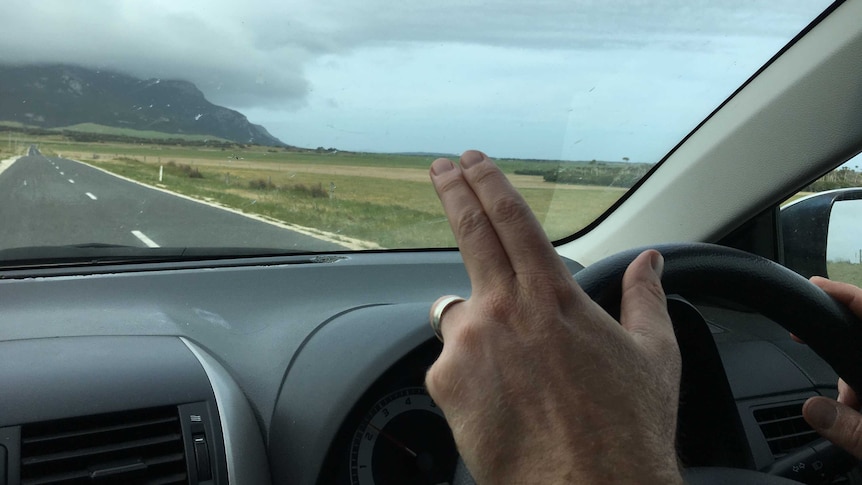
The Outback Wave: An Unexpected Change on the Open Road
The thought struck me during the long, 18-hour drive from Sydney to Adelaide over the holidays. Driving solo through the Australian interior, I noticed something strange. On previous trips, I felt a sense of company. Drivers passing in the opposite direction would offer a wave or "two-finger salute". A small, rhythmic acknowledgement of a shared journey. This time, it was almost non-existent.
My observation wasn't just anecdotal either. The same sentiment was recently echoed by the ABC, which noted a decline in the "truckie’s courtesy wave." Suggesting that something so simple, yet so communal, is vanishing. A quiet decline in the small threads that bind us together.
Why is this happening?
The Rise of Digital Insulation
Researcher Michael Bull (often called "Professor iPod") identified a potential answer to this phenomenon years ago. He argued that when we use our headphones to curate our own private soundtracks in public, we create an invisible "bubble."
This digital insulation protects us from the "contingency" of the real world—the risk of having to interact with a stranger or acknowledge our surroundings.
This insulation reinforces a sense of deep individualism. Bull describes this as "auditized looking," where we perceive our environment as if it were a scene in a movie. Instead of seeing the Outback as a shared space for connection, we aestheticize it, turning the world into a passive backdrop for our personal experience rather than a community in which we actively participate.
Furthermore, Bull argues that when we engage with technology in this way, we send powerful subconscious signals to everyone around us. When you wear headphones or stare at a screen, you signal that you are unavailable. You break the unwritten law of social reciprocity and effectively withdraw from the shared social contract.

Protecting Empathy in Digital Communication
This leads us to a sobering conclusion: technology seems to be fraying the fabric of the very emotion that keeps strangers connected and communities cohesive. Empathy.
Now, I am not suggesting the internet is inherently "bad". I am, however, observing a shift that requires a more conscious way of inhabiting the world. We need to stop seeing our lives as "online" versus "offline" and start seeing them holistically.
We must make a deliberate effort to rekindle the social contract—to use our tools to connect rather than disconnect, to be mindful of how technology alters our behavior, and to remember that compassion requires us to be truly present in whatever sphere we inhabit.
Next time you’re on the back roads, look up. Give the two-finger salute.
🍊 Creative Business is brought to you by Tomorrow