
THIS MONTHS EDITION
- Article: How Communication Theory Birthed a Business Name
- Podcast: Protecting Enterprise IP from the AI Revolution
- Exclusive: Subscriber Offer
When you’re at a typical networking event, there is a predictable rhythm. You look down at a name tag, read the company logo, and ask the standard icebreaker: “So, Company Name... what do they do?”
It’s a perfectly normal question. Perhaps just a bit too standard.
At a startup event, however, the name on that tag is usually the personal creation of the person standing right in front of you. I was at one of these conferences recently when an attendee—a particularly inquisitive Canadian—went a step further.
"Tomorrow. That’s a cool name," he remarked. "Where did it come from?
The name wasn't an accident, and this particular Canadian loved it, so I thought it was about time to rehash it here. The story itself begins in a tiered seated university lecture theatre over a decade ago.
Discovering Marshall McLuhan: A Lesson in Business Communication
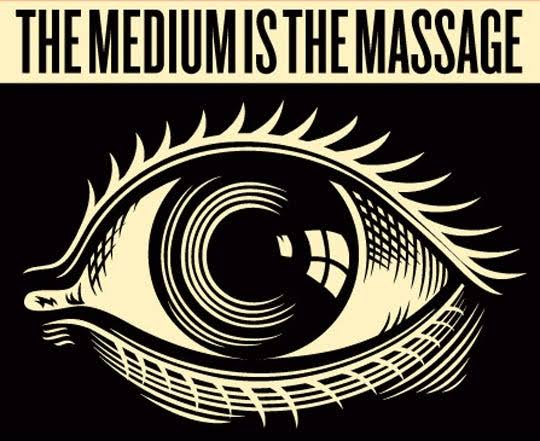
In 2013, I was deep into Audio Engineering and Music Production. It was there that I first encountered the work of Philosopher Marshall McLuhan. His core philosophy—The Medium is the Message—suggests that the "packaging" of information carries just as much weight as the information itself.
In the music world, this was intuitive. An album cover, the texture of a vinyl sleeve, and the media narrative surrounding a release all shape how a listener relates to the music.
That was a simplistic reading in hindsight. But fast forward three years to my Master’s Degree in Digital Communications and Culture, and McLuhan reappeared. This time, the stakes had changed. We were no longer talking about album art; we were studying how digital communication technologies were materially reshaping human society itself.
"The form of a medium embeds itself in any message it transmits, creating a symbiotic relationship by which we shape our tools and those tools subsequently shape our culture and perception." — Marshall McLuhan
How Digital Transformation Alters Our Communication Packaging
It was a fascinating study: the idea that human communication is perceived differently depending on the vessel. Whether it’s a handwritten letter, a crisp email, or a fleeting text message, the "vessel" changes the emotional weight of the words.
It means that to communicate effectively in the modern age, you have to be in tune with the causal effect of your "packaging." If you choose the wrong medium, the message may have unintended consequences on arrival.
This realization led to a glaring observation in my professional life: Technology was evolving, but the Sales process was stuck in the past.
The Evolution of B2B Sales and the Impact of AI
For ten years, I watched society adapt to digital-first communication while the sales world remained tethered to the old ways: direct verbal pitches, cold calls, and static emails.
I started to wonder: What happens if we revisit McLuhan’s philosophy through the lens of a salesperson? If the medium is the message, then the tools we use to sell are actually part of the value we provide. With the sudden rise of AI, this idea transitioned from a "nice-to-have" theory to a business necessity. We needed a new way to overlap marketing and sales to meet the needs of a digitally-native audience, we needed to upskill people to deepen their understanding of modern communications, I needed to help people contextualise what was actually happening.
But how was I going to do that? To start, I had to understand what these changes actually meant in practice today.
Marching Backwards Into the Future: Why the Name "Tomorrow"?
McLuhan famously said, "We look at the present through a rear-view mirror. We march backwards into the future." He meant that we can only understand new technology by comparing it to what came before. The printing press birthed the newspaper; the newspaper birthed the radio. We are always looking back to see where we are going.
So, why the name Tomorrow?
At the time, I had a kernel of an idea—a hunch that sales and communication were about to collide in a brand-new way. When I asked myself what that business would eventually look like, I realized I didn't have the full answer yet. I was still looking through the rear-view mirror.
I decided I’d find out the answer... Tomorrow.
- Brad Eather
P.S. McLuhan was Canadian—a fact my friend from the conference was very proud to remind me of.