Why Gen Z in the Workplace is the Corporate Mirror We Urgently Need w/ Katie Iles
CREATIVE BUSINESS PODCAST | EP 13
What if Gen Z isn’t the corporate problem everyone complains about, but rather mirror of our broken corporate culture?
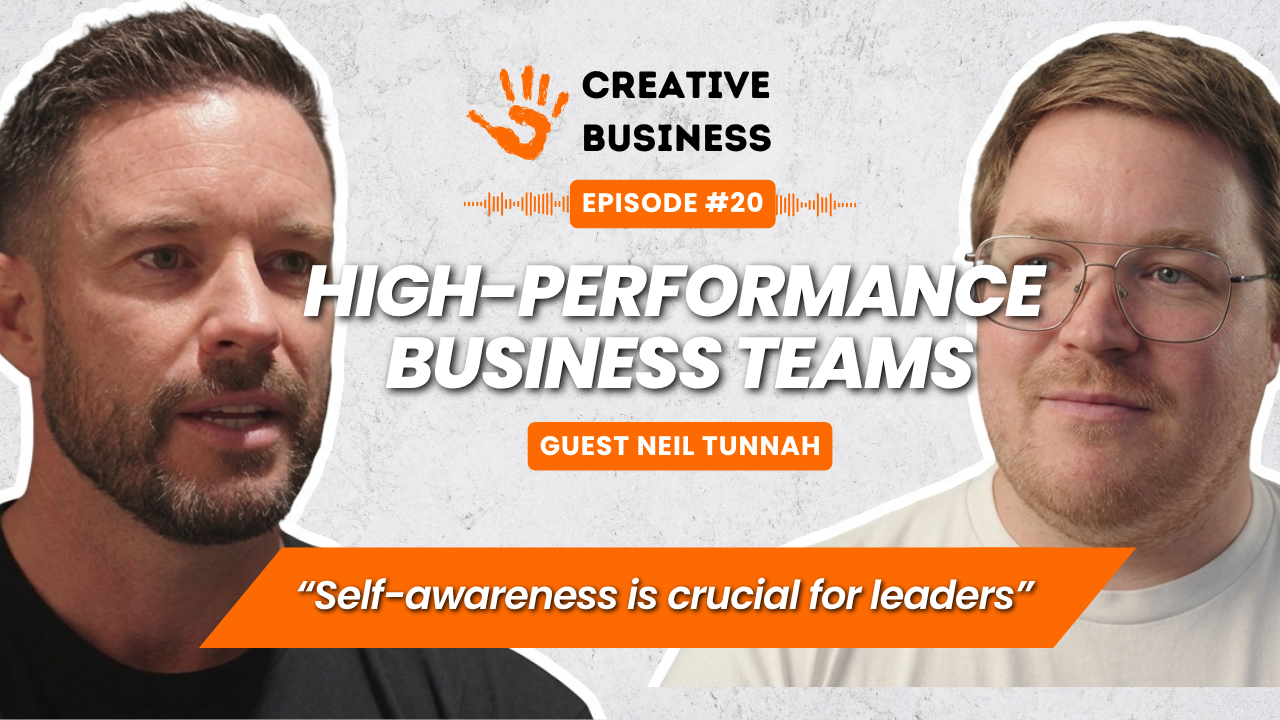
In this episode of the Creative Business Podcast, host Brad Eather sat down with Katie Iles, a leading Generational Theorist to discuss the cultural nuances, and structural friction points defining the modern workplace environment.
Evolving Beyond the Echo Chamber
From hyper-connectivity, algorithmic influence and deeply shifting employee expectations, Iles challenges the standard Gen Z stereotypes. Instead of coddling a demographic, she argues that the problem we perceive while managing our youngest generation is actually revealing significant corporate culture problems within our legacy business systems.
LISTEN NOW
Moving Past Stereotypes to Understand Gen Z Psychology
In the corporate boardroom today, leaders are actively trying to decode the best methods for managing Gen Z without creating team friction. This is because many modern business playbooks were written decades ago, causing them to clash heavily with modern employee values.
Too often, corporate circles default to labels, calling Gen Z "lazy," "entitled," or lacking resilience. But understanding Gen Z psychology requires looking at how this generation was formed.
"I think that we have pathologized an entire generation,"
Iles points out.
"They're not so much a problem that needs to be solved so much as they are a lightning rod or a catalyst that's inviting us into smarter, more human, more empathic, more future-fit leadership."
Mental Health in the Digital Age: The "Polycrisis" Reality
Older generations often yearn for a simpler time, but younger workers have only ever known a fast-paced, always-on and connected world. To understand gen z work ethic and values, we have to look at the effects of social media on Gen Z and the unique problems they’ve inherited.
Gen Z has grown up in what Iles refers to as a polycrisis—a simultaneous compounding of global stressors. From economic volatility and climate anxiety to a global pandemic and a collapse in institutional trust, their brains have been steeped in constant, high-stimuli information streams.
While they possess incredible self-awareness regarding mental health in the digital age, they are entering multigenerational workplaces with highly hypervigilant social cortexes. They aren't looking to cause trouble; they are hunting for coherence and psychological safety.
Decoding Gen Z Values in the Workplace
When we compare the different generational traits of Gen Z and work-life balance, we see a group of professionals demanding transparency, clear developmental pathways, and human-centric corporate cultures.
Why Work is Becoming the "Third Space"
To understand this need for gen z work life balance, you have to understand a major sociological shift: the disappearance of traditional community outlets.
Historically, humans divided their lives into three distinct arenas:
- First Space: Home
- Second Space: Work
- Third Space: Community hubs (clubs, sports groups, religious organizations, public forums)
With increasing disengagement and rising paces of life, traditional engagement with third spaces has plummeted. Consequently, Gen Z looks to work to fulfil those missing communal needs. They view the workplace as a primary ecosystem for relationship, alignment of values, and purpose—which is why an astonishing 64% of Gen Z workers report they would happily take a pay cut to work for a company that aligns with their personal ethics. They don't want a job that comprises their entire existence; they want to cultivate a vibrant life that purposefully includes work.
Bridging the Gap: Intergenerational Collaboration & Communication
A prominent point of friction highlighted by Brad and Katie is the corporate communication gap.
Gen Z spends roughly 75% of their time communicating digitally. They are masters of algorithmic filtering, meta-messaging, and asynchronous tools like Slack or Teams. However, this means they enter the workforce with a vastly different set of soft skills. It’s not that they can't communicate effectively in person; they are simply less practiced at it.
This is why so often intergenerational collaboration breaks down when generations make assumptions based entirely on their own professional upbringing. A Gen X manager might view a text message about an important schedule change as unprofessional, while the Gen Z employee sent it specifically to avoid rudely interrupting the manager's meeting.
WATCH NOW
Empathetic Leadership: The New Operational Playbook
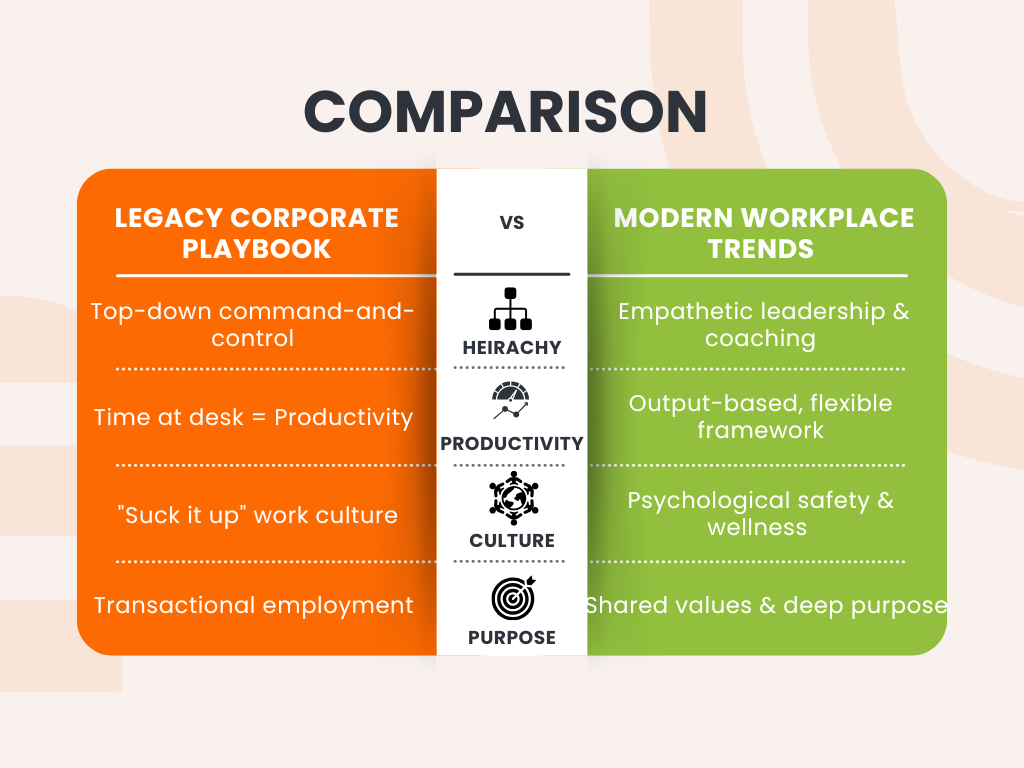
Successfully changing workplace culture means shifting away from rigid hierarchies toward empathy in leadership
"All that the last 50 years has done post-industrial revolution has made people's value commensurate to what they produce, not who they are,"
Says Iles.
"We have a massive opportunity for the workplace to rehumanize.
How to Support Employee Wellbeing Through "Scaffolding"
Instead of expecting young workers to simply "hack it," modern corporate leaders need to transition into cultural interpreters. A powerful framework for this is leadership scaffolding.
Just as physical scaffolding temporarily supports a building under construction, leadership scaffolding creates a secure infrastructure around developing employees. It doesn't require the worker to be a flawless finished product. Instead, it safely guides them through strength-based metrics, clear coaching loops, and mutual interdependence.
When businesses embrace empathetic leadership, stop treating human beings like commodities, and actively connect daily tasks to an overarching organizational vision, they trigger natural neurobiological flow states that inherently supercharge engagement, retention, and performance.
The Path Forward: Upgrading Your Workplace Operating System
Ultimately, the friction surrounding Gen Z workplace trends is not a threat to business stability—it is an urgent invitation to upgrade our corporate operating systems. The legacy playbook that equates presence at a desk with productivity, and treats employee wellbeing as a superficial checkbox, is fast reaching its expiration date.
By pushing back against broken social contracts and demanding psychological safety, Gen Z is serving as a vital feedback loop for modern organizations. They are forcing leaders to move past stereotypes and adopt a management style anchored in genuine empathy in leadership.
The result is a workplace built on mutual interdependence—an environment where historical experience and modern digital agility complement each other rather than clash.