Data Sovereignty vs. Centralized AI: Embracing a Human-in-the-Loop Framework
The acceleration of artificial intelligence has left many corporate leaders feeling less like they are leading an innovation wave and more like they are participating in a game of roulette.
While tech giants promise unrivalled operational efficiency, a trust gap is beginning to emerge. Research indicates that roughly 70% of the corporate workforce views these modern tools with genuine hesitation or fear.
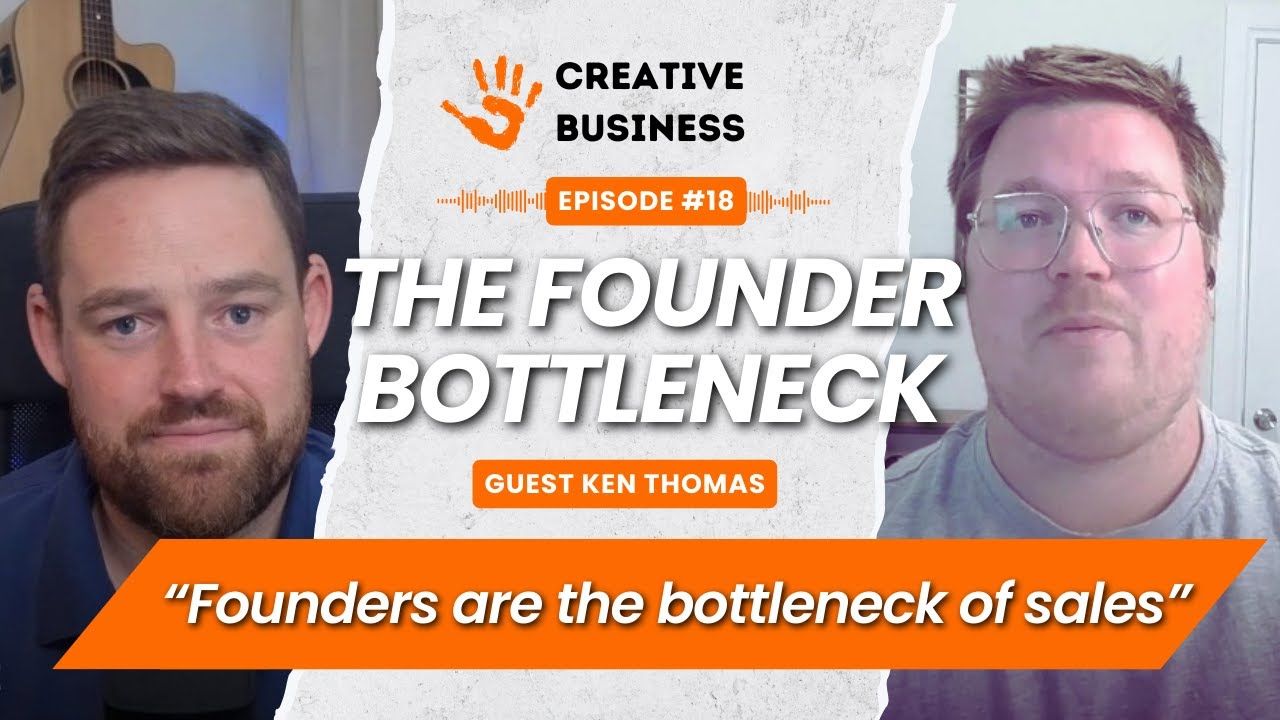
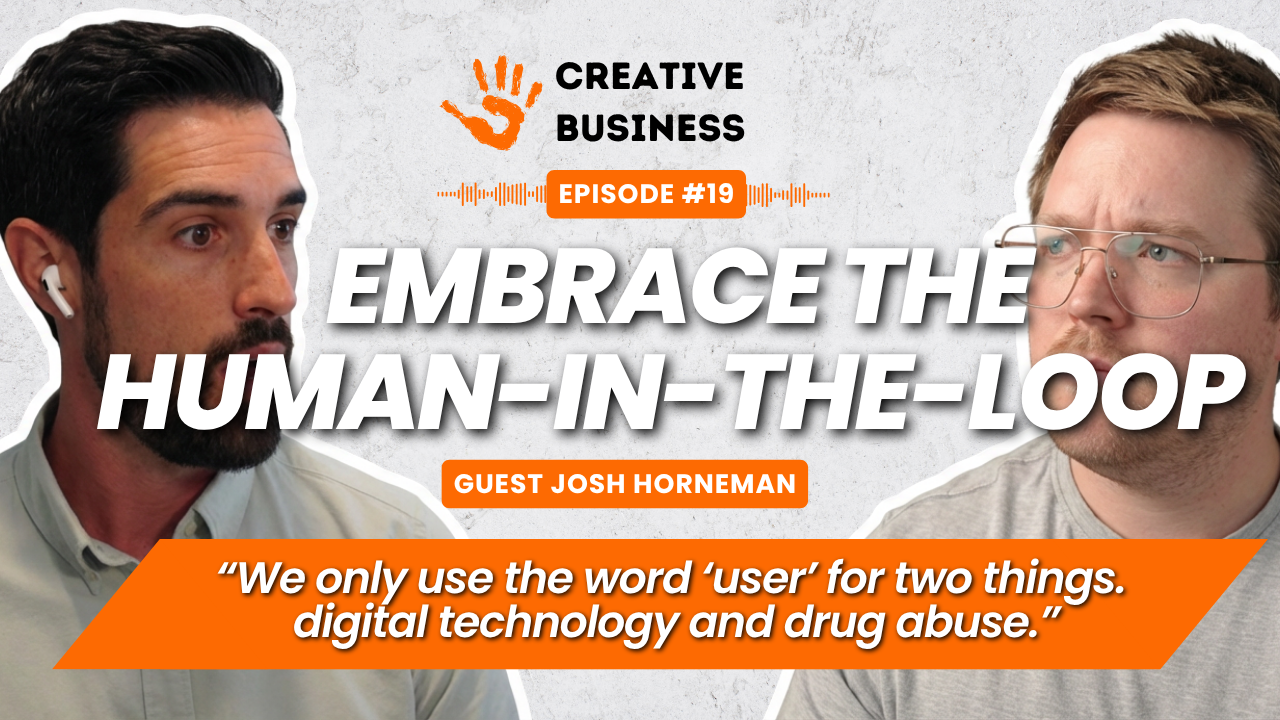
In this episode of the Creative Business Podcast, host Brad Eather sat down with Josh Horneman, co-founder of the private enterprise AI operating system HOWLL. Horneman breaks down how mid-to-large-scale organizations can bypass the data risks of public cloud infrastructure by prioritizing Data Sovereignty and cementing a Human-in-the-Loop operational philosophy.
LISTEN HERE
The Enterprise AI Trust Gap: Beyond the Public Cloud
When ChatGPT and similar large language models (LLMs) originally arrived on the scene, employees without tether began to input sensitive corporate data into public, centralized platforms with minimal safety guardrails.
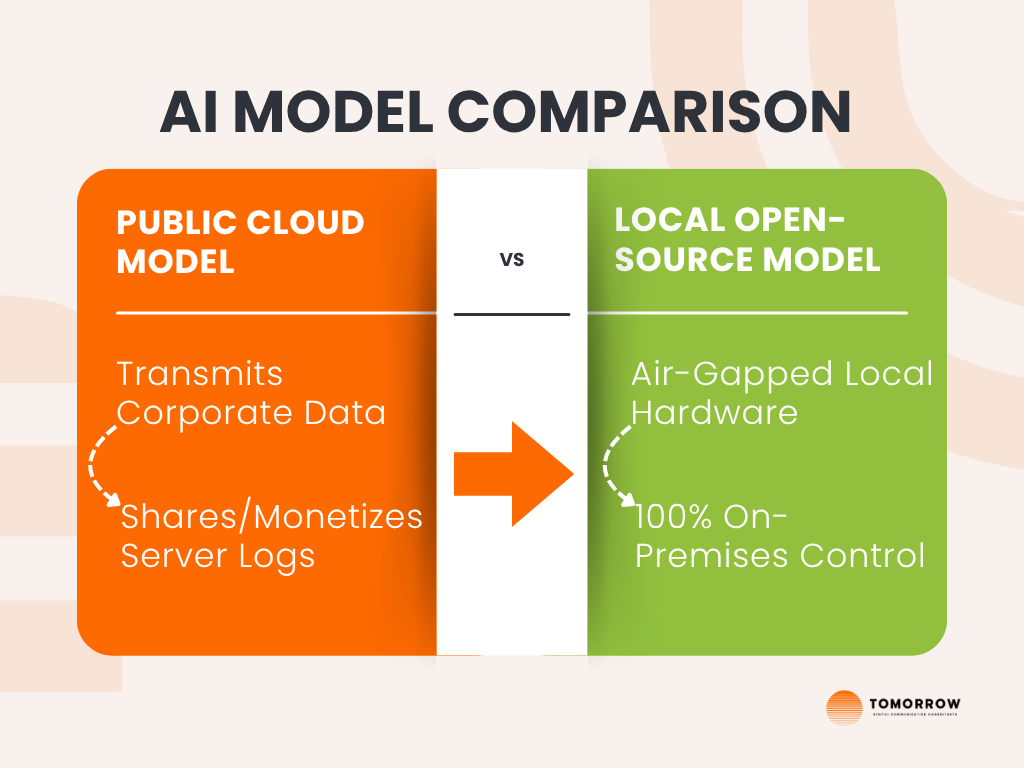
Horneman points out a stark reality regarding these centralized tech providers: their underlying business models mimic those of social media and advertising cookies—they are engineered to collect, analyze, and profit from your data.
For organizations operating under regulatory frameworks, this has created real operational and compliance risks. These AI tools operate only as statistical probability engines; they do not understand reality, meaning they frequently produce "AI slop" or hallucinations.
In a casual consumer environment, an AI hallucination is amusing; in a corporate environment, fabricated numbers or inaccurate legal clauses can trigger catastrophic liability.
Achieving True Data Sovereignty via Local Hardware
To mitigate compliance risks, progressive organizations are shifting toward absolute data control. Data Sovereignty in a modern enterprise context means ensuring your data remains entirely within your own environment of operational control.
"There is a massive portion of the AI space moving forward via an open-source capacity. This means you can download and run the entirety of a highly capable model locally on your laptop, your phone, or on a few dedicated graphics processing units (GPUs) inside your office. It never even needs to touch the internet." — Josh Horneman
By transitioning to localized, air-gapped open-source models, enterprises enjoy distinct advantages:
- IP Protection: Proprietary methodologies—such as an engineering firm’s processing logic or a law firm's unique legal strategy—are protected from systemic data exploitation or model retraining.
- Operational Visibility: Leadership retains a clear log of exactly who is using the models, where AI is being deployed, and what internal processes are being optimized.
- Knowledge Retention: When an employee exits the organization, their specialized workflows and system optimizations stay documented within the enterprise rather than walking out the door with them.
While deploying local server racks to support hundreds of concurrent users requires a substantial capital investment, the economic tipping point is arriving rapidly.
The Human-in-the-Loop: Redefining Workplace Productivity
A primary driver of workforce anxiety is the replacement narrative—the fear that employers are actively training their employees replacements. While certain highly repetitive, rote administrative tasks will inevitably be automated by this technology, Horneman challenges the idea of mass corporate layoffs. Instead, he champions a Human-in-the-Loop framework.
The goal of a Human-in-the-Loop framework is to position the human expert above the technology to provide critical quality oversight, transforming staff members into high-output decision-makers.
Case Study: High-Value Financial Analysis
Consider a corporate accounting department where a professional spends hours manually shuffling travel reconciliations and matching receipts. By implementing localized AI to automate the mundane data entry, the accountant steps into a review-and-verify role. Freed from administrative friction, they can redirect their human capital toward high-level financial analysis and strategic growth forecasting.
Case Study: Corporate Report Writing
In a service firm reliant on heavy report writing, historical archives form an excellent localized knowledge base. An LLM can securely ingest this data to draft the repetitive compliance introductions and corporate profiles in a couple of hours. The human expert then steps in to meticulously review, refine, and sign off on the asset—ensuring absolute contextual accuracy.
Raw Data Ingestion ──> Local AI Generates First Draft ──> Human Expert Reviews/Refines ──> Final Secure Output
By auditing internal workflows and automating low-level administrative burdens, companies can unlock a significant productivity uplift. This allows existing teams to capture a larger percentage of their addressable market without adding massive headcount overhead.
WATCH NOW
Strategic Change Management: Leading Teams Through the Digital Transition
Successfully integrating technology into an enterprise remains an entirely human exercise in change management. To dismantle the psychological barriers held by an anxious workforce, leadership must move away from top-down mandates and instead focus on structured, empathetic onboarding .
Horneman recommends a practical three-step framework to navigate this transition:
-
Establish an Honest Baseline: Begin with anonymous surveys .This gives leadership an unadulterated understanding of how staff genuinely feel about AI and how they might already be utilizing it.
-
Empower Internal Power Users: Identify and resource "power users"—team members who are naturally motivated and fascinated by the technology. By upskilling them first, they can visually demonstrate immediate, practical workflows to their peers, proving that the tool reduces administrative friction rather than headcount.
-
Encourage Cognitive Sparring: Train employees to use AI models as personalized research assistants or cognitive sparring partners—instructing the tools to aggressively attack business logic and locate blind spots.
While managing this operational shift, leadership must also champion strict professional discipline regarding how these tools are consumed. As conversational interfaces become uncannily human, there are real psychological risk of teams becoming deeply co-dependent on monetization-driven algorithms. True change management means ensuring that technology safely amplifies collective intelligence without eroding core human agency or creative independence .
🍊To hear more conversations on the intersection of commerce and creativity subscribe to the Creative Business podcast where ever you listen to podcasts.
ABOUT US
DIGITAL MARKETING CONSULTANTS
Tomorrow embed inside $1M–$10M professional services to turn complex expertise into high-converting content systems that capture attention and drive growth.