B2B Go-To-Market Strategy: Why Your Business Bottleneck is in the Founder’s Head
Every small business or scale-up founder eventually hits this wall. You are excellent at what you do, your clients love you, and you’ve built a company off your own grit. But then, the very skills that helped you build the company become the exact bottleneck that stops it from growing.
You are the master of your craft, but you aren’t necessarily a teacher, and there is no blueprint to hand over to a team to move them forward without you.
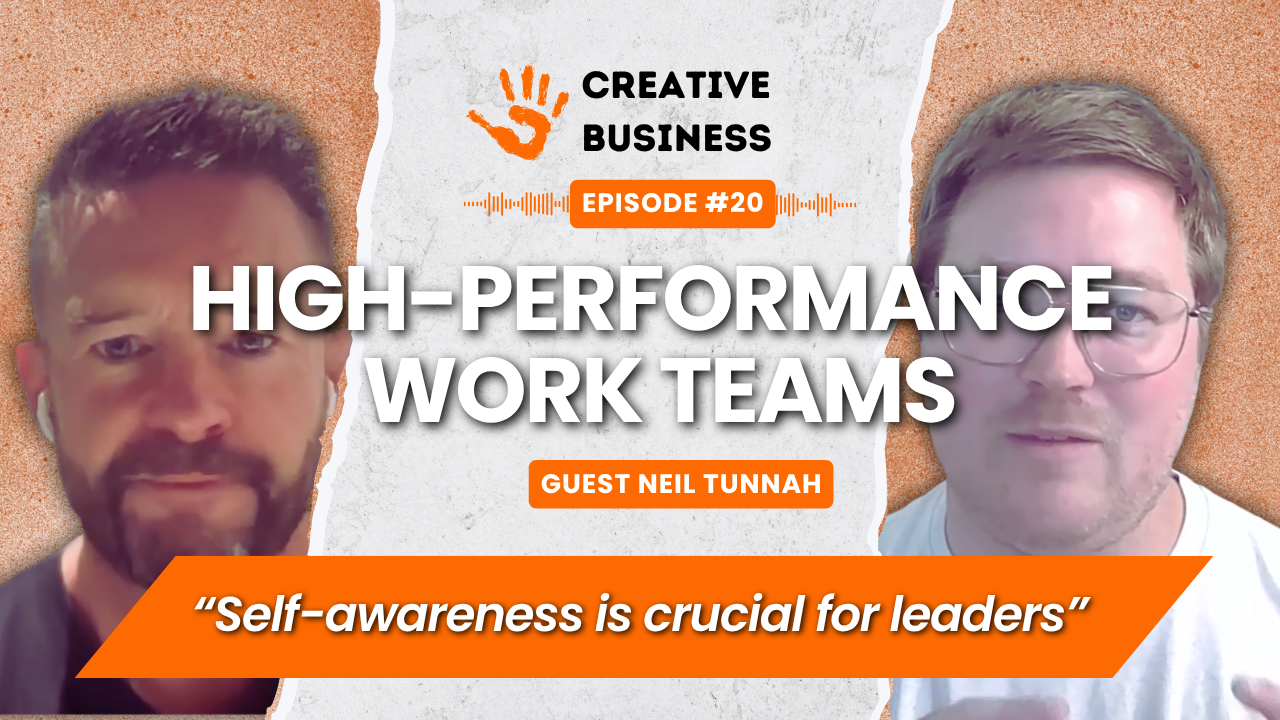
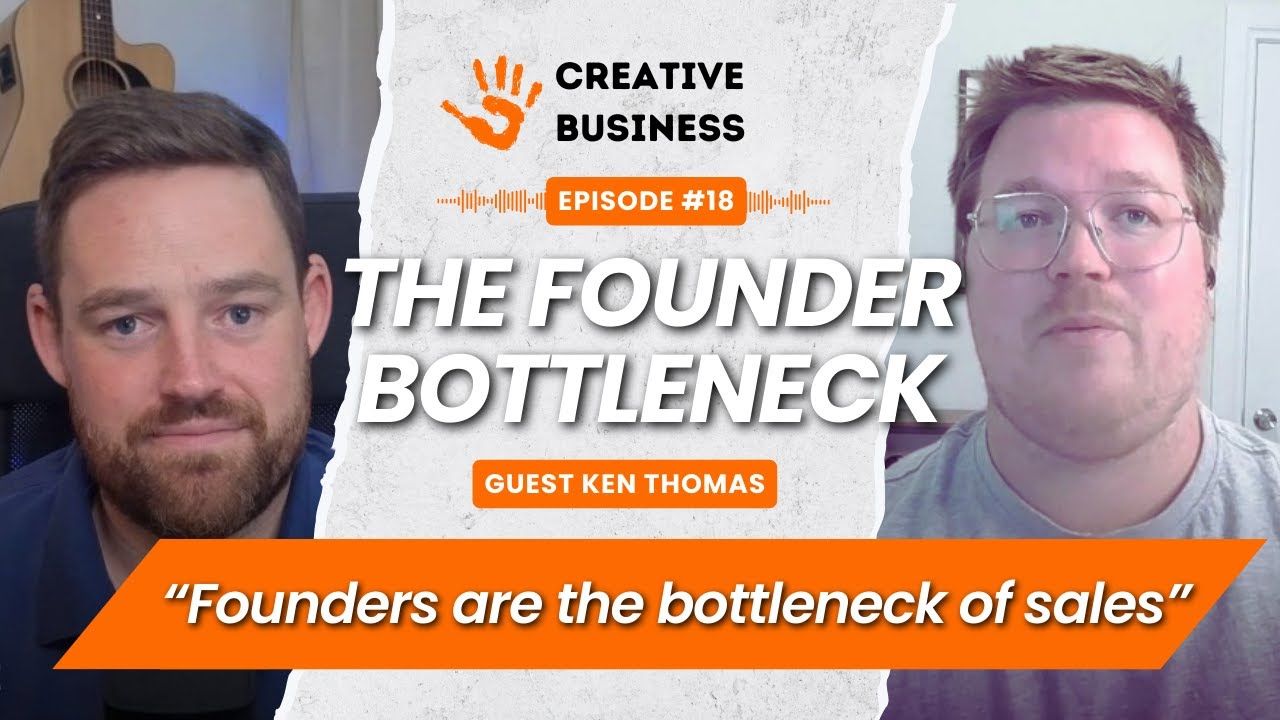
In this episode of the Creative Business Podcast, Brad Eather sat down with Ken Thomas, an MBA-qualified growth specialist, to unpack what a true go-to-market strategy for B2B actually entails. Thomas argues that true scale isn’t achieved by just hiring more salespeople. Instead, it requires building a repeatable, predictable revenue architecture.
LISTEN NOW
Go-To-Market Misconceptions: Tools Won't Save You
When a business is struggling to scale their revenue, the modern instinct is to look toward technology. Founders invest in fully spec’d CRMs, AI-driven sequence tools, and complex automation workflows.
Thomas is quick to shatter this illusion:
"The new tool will not solve your problem," he warns. If a business does not clearly understand what it stands for, where it is positioned in the market, the specific problem it solves, and exactly who is going to buy, the tech stack is irrelevant.
He argues true GTM strategy has nothing to do with rev-ops buzzwords or tech stacks. It is about moving from ad-hoc closing to structured sales process by treating growth as a first-principles design problem. It starts with understanding your market, mapping out your competitive landscape to understand were your offer is positioned.
Stop Calling, Start Cataloguing: Assessing the Battlefield
For technical B2B sectors like manufacturing or IT, outbound sales can feel incredibly daunting. Many founders recoil at the idea of cold calling simply because they associate it with greasy, high-pressure tactics.
Thomas shifts this mindset by looking to history.
"What do the best military leaders do before making a move? They assess the battlefield, the terrain, and the conditions."
A successful go-to-market strategy treats sales activity no differently. Instead of treating sales as a numbers game where "more activity equals more leads, scaling relies on the right activity, at the right time, to the right individual.
This requires cataloguing your market into four distinct quadrants.
Based on your Total Addressable Market (TAM) :
-
Who is buying now?
-
Who is buying soon?
-
Who is buying later?
-
Who is never going to buy?
By picking up the phone with a "help first, close second" mindset, your team isn't making sloppy, generic pitches. They are gathering critical market intelligence and earning their permission to go to market by delivering genuine value.
WATCH SNIPPET
Triage vs. Discovery: The Antidote to Meeting Attendance
Perhaps the most frustrating experience for any business leader is the "ghosted" proposal. You have a seemingly great conversation with a prospect, spend hours drafting a highly detailed proposal, send it off, and then... silence .
According to Thomas, the reason you get ghosted is a fundamental flaw in execution: you failed to separate triage from discovery .
"Being interested does not equal being qualified," Thomas emphasizes.
Scale-ups and small business owners simply do not have the time to invest in prospects who are merely curious. To protect your resources, a robust go-to-market strategy splits the sales qualification process into two intentional phases :
1. The Triage Phase
Think of this as the emergency room nurse. In a quick 5-to-10-minute conversation, anyone in your business should be able to ask a few basic, standardized questions to determine if a lead is a "go" or a "no-go" based on clear qualifying criteria.
"Where does it hurt? Can you breathe? If they don't pass triage, they don't get to see the doctor."
2. The Discovery Phase
Only when a lead passes triage do you invest the time into a deep-dive discovery. This is where you uncover their situations, their motivations, the true business impact of their pain, their timelines, and who is actually involved in their decision-making process.
If your go-to-market playbook executes this framework properly, the final pitch becomes a formality.
Strategy as a Creative Outlet
As always the conversation wrapped up with a refreshing take on corporate creativity. For a long time, Thomas admitted he didn't view himself as a creative person because he couldn't write original songs on his guitar. It wasn't until his MBA studies in design thinking that a professor flipped the switch for him: the simple art of making something is creativity.
For business leaders, building a B2B go-to-market strategy, designing a playbook, and engineering a revenue architecture are deeply creative acts. Nothing is permanently fixed. A strategy is a living blueprint meant to be tested, validated, and continuously iterated until you achieve the desired outcome .
If your business is currently stuck in the chaos of ad-hoc closing, it’s time to stop looking for a magic software tool. Step back, assess your terrain, capture the essence of how you win deals to design a go-to-market strategy that allows your business to scale independently of you.
ABOUT US
DIGITAL MARKETING CONSULTANTS
Tomorrow embed inside $1M–$10M professional services to turn complex expertise into high-converting content systems that capture attention and drive growth.