Turning Cognitive Diversity into a Unique Business Advantage
When business leaders talk about neurodiversity in the workplace, the word “accommodation” often get's thrown around with an unwritten disclaimer. It implies a compromise—a side pool created for non-traditional employees so they can work independently of the mainstream without disrupting standard operations.
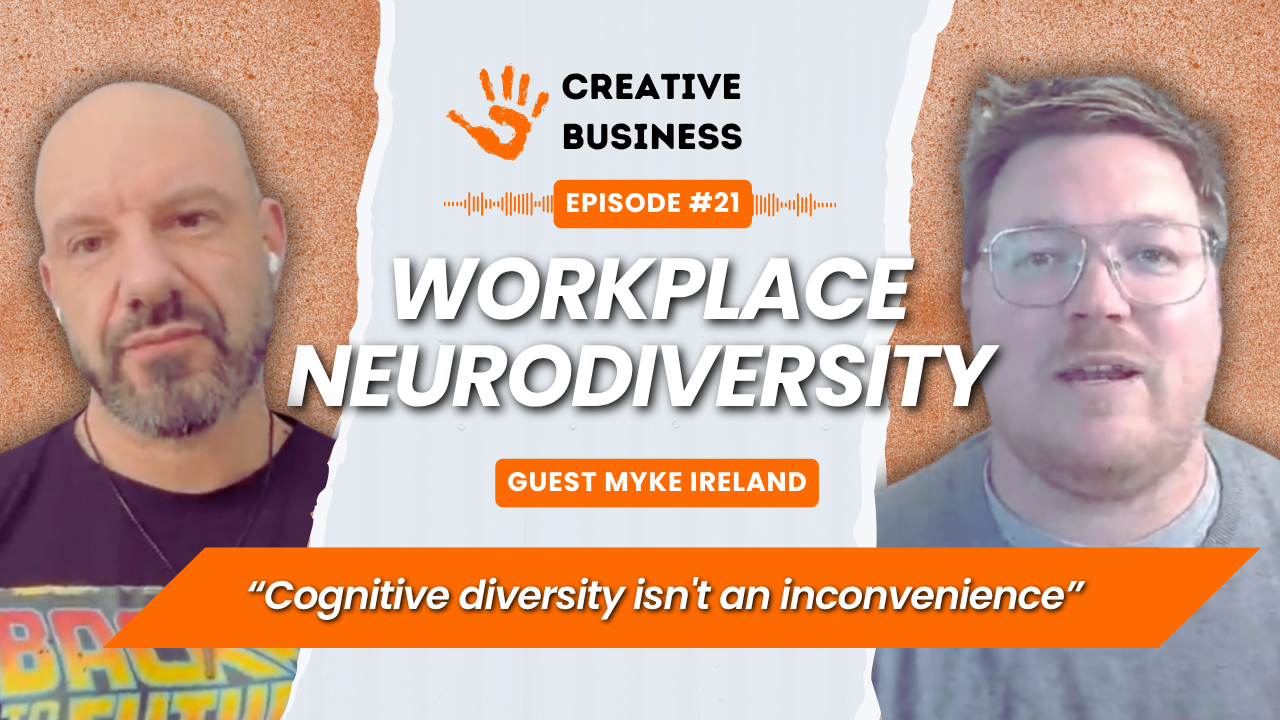
In this conversation on the Creative Business Podcast, host Brad Eather sits down with former Chief Technology Officer Myke Ireland to dismantle this mindset. Having spent decades scaling the corporate ladder before receiving a late-in-life dual diagnosis of autism and ADHD (AuDHD), Myke offers a sharp, practical breakdown of why treating cognitive differences as an edge case actively harms business performance.
LISTEN HERE
Neurodiversity in Corporate Culture
Most businesses claim to value innovation and original thinking, yet their operational frameworks remain anchored to neurotypical standards.
"We have this concept of accommodating the neurodiverse. It's as if there's one pool of people here that are the 'normals,' and then there's a pool over to the side... Every now and then we can come and visit the main pool, but we've got to go back to the other pool because that's where we pee."
— Myke Ireland
Silo-ing non-traditional thinkers prevents organizations from making systemic operational improvements. Simple, low-cost baseline adjustments—like enforcing the use of closed captions across meeting platforms such as Zoom—do not just reduce cognitive load for non-linear thinkers; they improve information retention, engagement, and clarity for the entire workforce.
When corporate tools and communications are built around a narrow demographic, adoption rates suffer, change management fails, and internal friction increases.
AuDHD: A Perspective From Leadership.
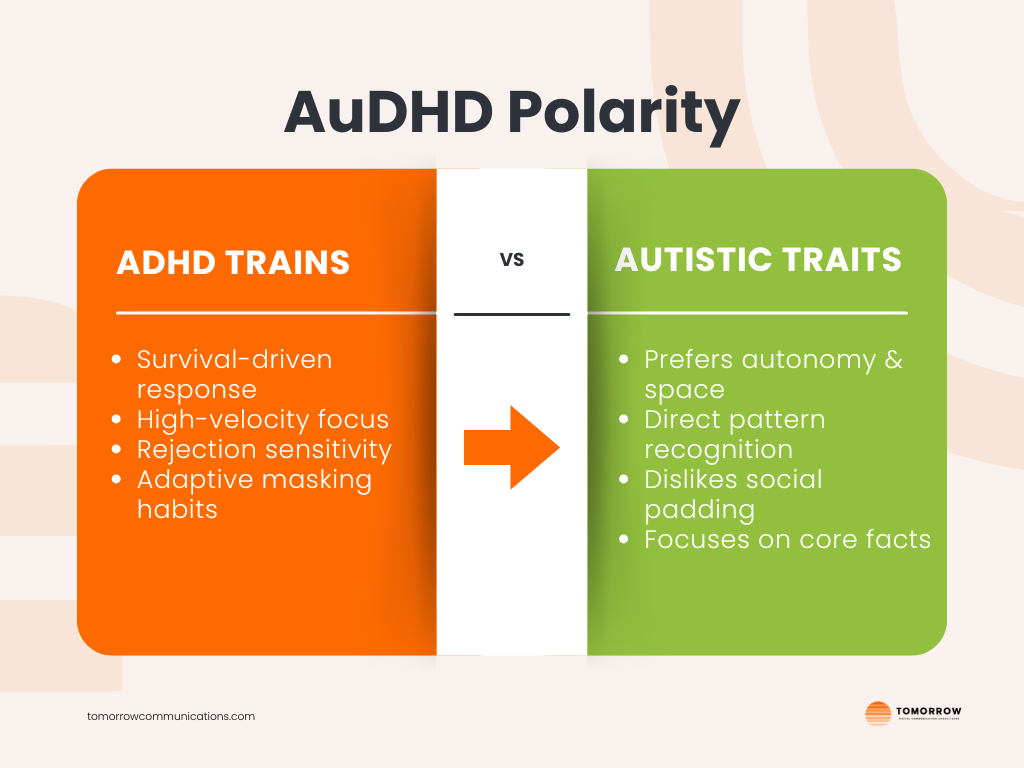
Reflecting on his late diagnosis at age 43, Myke describes the constant friction between his ADHD characteristics and autistic traits—and how that tug-of-war impacts one's leadership style and energy reserves.
When unmanaged, ADHD traits often drive individuals to overcompensate for negative feedback in their early-life by taking on high-pressure roles. Treating ADHD can bring autistic traits into sharper focus, requiring leaders to rebalance their social energy, establish clear boundaries and change how they interact with their team —particularly when it comes to their own empathic response and emotional regulation.
Why Younger Employees Have Higher Expectations of the Workplace.
The momentum behind workplace productivity is no longer just a top-down executive conversation—it is being driven by entry-level candidates entering the corporate world.
Historically, neurodivergent professionals felt forced to mask their authentic selves. Today, a younger generation is entering the talent pool with a completely different set of expectations. Rather than to request accommodations, modern candidates arrive at interviews evaluating whether an organization’s culture aligns with their mental health and cognitive needs.
Before discussing salary or job titles, these workers ask direct questions about psychological safety, work-from-home flexibility, and how the business supports non-linear workflows. For traditional organizations, this cultural evolution presents a clear choice: adapt to neurodiversity in the workplace, or lose top-tier talent to more agile competitors.
WATCH SEGMENT.
Redefining Workplace Productivity.
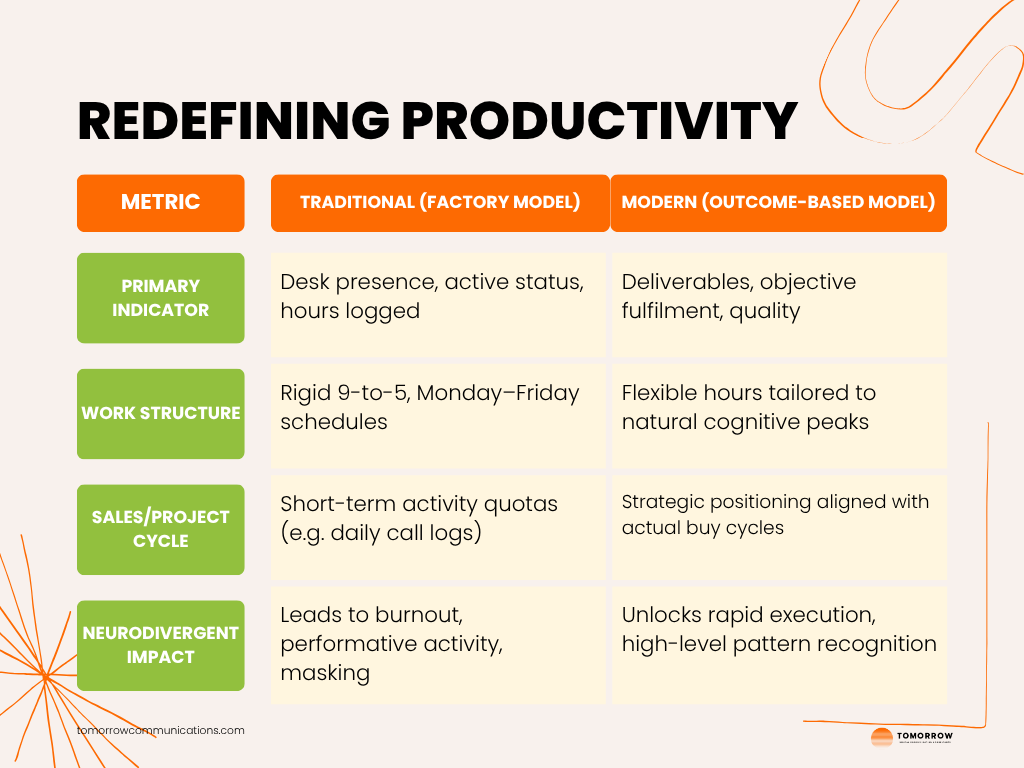
A central focus of the discussion is the disconnect between traditional metrics and actual output in modern knowledge work.
Myke describes measuring workplace efficiency by physical presence as a remnant of post-agricultural factory models. For non-linear thinkers, redefining workplace productivity requires recognizing that high-yield work occurs in rapid, hyper-focused bursts rather than flat eight-hour increments.
Pattern Recognition and Risk-Management
One of the strongest operational assets non-linear leaders bring to neurodiversity in the workplace is macro-level pattern recognition. They spot flawed strategy, poor product-market fit, and operational bottlenecks well before they surface on financial reports.
In traditional corporate environments, this candid threat detection is often mislabelled as negativity. Organizations that embrace cognitive diversity as a business advantage encourage analytical thinkers to flag operational risks early and foster action to save time and capital.
AI Improving Executive Function
The rise of generative AI marks a major shift for non-linear thinkers. Executive function—especially the challenge of turning dense, interconnected streams of ideas into structured corporate execution—has long been a bottleneck for creative leaders.
- Managing Executive Function: AI tools act as an external structure, helping professionals map, prioritize, and format macro-level concepts into actionable plans.
- Direct Communication: Because AI interfaces respond to structured prompts, non-linear innovators can test and iterate ideas at scale.
- Bridging Vision to Output: As AI bridges the gap between strategy and execution, non-linear thinkers can launch and manage complex initiatives with far less administrative drag.
Takeaways for Business Leaders
- Adopt Outcome-Based Metrics: Focus on redefining workplace productivity by shifting performance evaluations away from presence toward the quality and timeliness of deliverables.
- Upgrade Workplace UX: Design workplace systems, meeting formats, and tech deployments around multi-modal learning styles and flexible workflows to support neurodiversity in the workplace.
- Leverage Early Pattern Detection: View direct, analytical feedback as an operational risk-mitigation tool that positions cognitive diversity as a business advantage.
- Integrate AI Tools: Provide software that removes administrative friction, allowing neurodiverse employees to focus on core strategic strengths.
🍊Listen to more conversations exploring creativity and commerce. Subscribe to the Creative Business podcast wherever you listen.
ABOUT US
DIGITAL MARKETING CONSULTANTS
Tomorrow embed inside $1M–$10M professional services to turn complex expertise into high-converting content systems that capture attention and drive growth.