Boost Sales Performance With the Science Of Happiness
Business success is traditionally measured by hitting quantitative targets: a closed deal, a quarterly milestone, or a record revenue month. Yet, any professional who has ridden the emotional rollercoaster of sales knows that the gratification of hitting a metric is short-lived.
Once an objective is secured, our minds shift to the next mountain to climb. This perpetual chase often forces companies to analyse the data, but never actually stop to check in on the emotional state of their people .
What Success Looks Like in Todays Corporate Culture
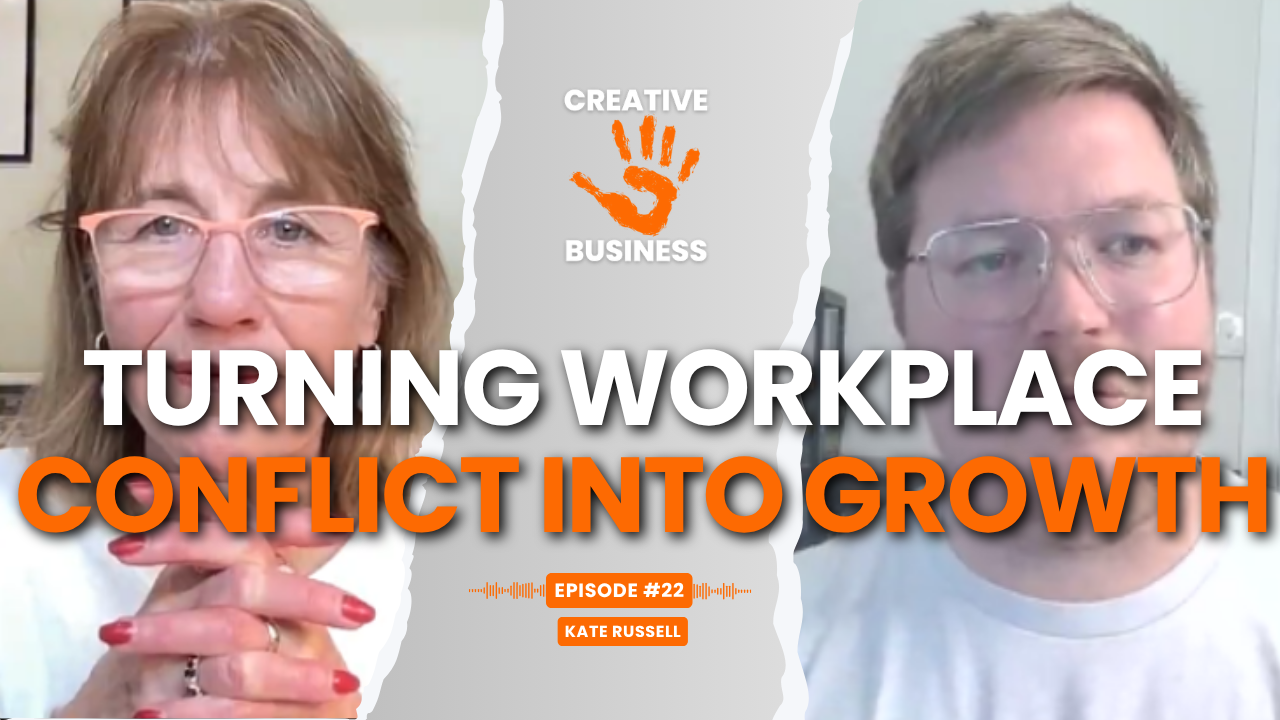
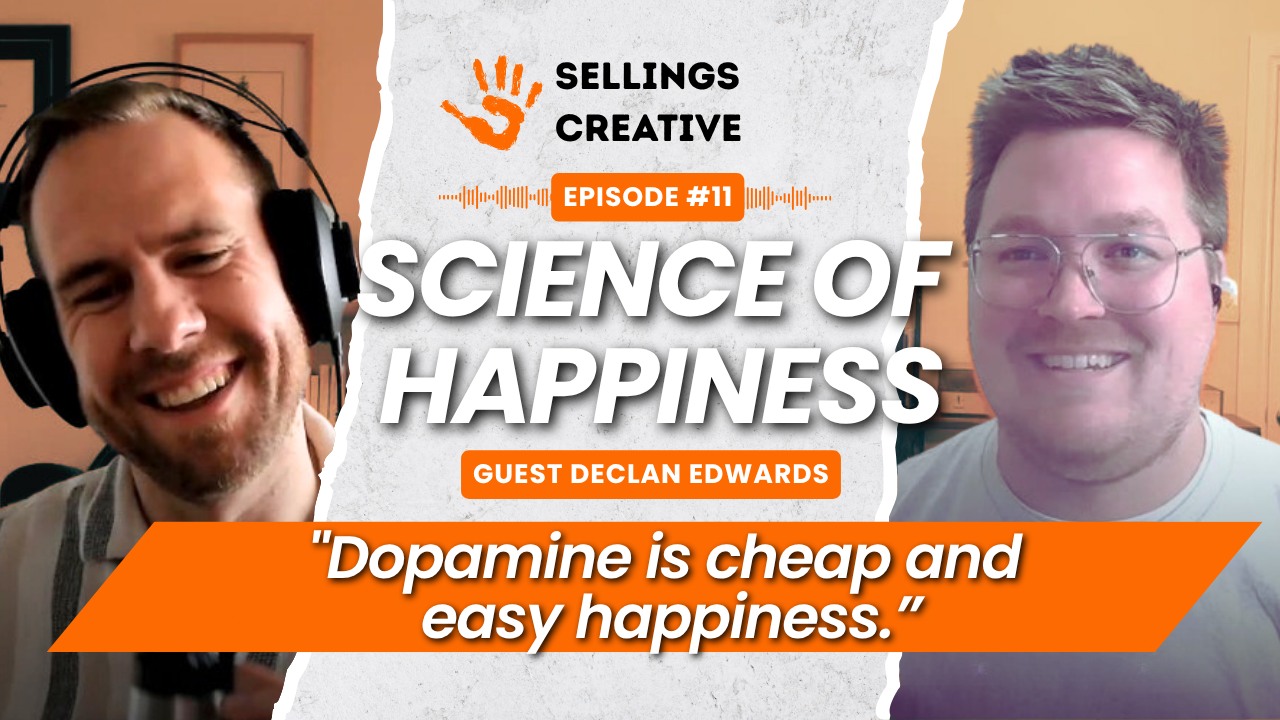
According to positive psychology researcher Declan Edwards, building a sustainable corporate people strategy means redefining what it means to be successful. Appearing on the Creative Business Podcast with Brad Eather, Edwards shared that operational resilience isn't born from higher pressure; it is cultivated by intentionally designing workplace happiness into the architecture of your organization.
LISTEN NOW
What is the Science of Happiness
Many organizations approach corporate culture through the lens of hedonic psychology. This philosophy posits that maximizing temporary pleasure and minimizing immediate pain is the key to satisfaction.
In a business context, this translates to the "I'll be happy when" cycle: I'll be happy when I hit a $10,000 month, or when we lock down that major enterprise account .
The flaw in this approach is a psychological phenomenon known as hedonic adaptation. Our brains quickly normalize new milestones. The target that once brought a rush of dopamine eventually feels like a baseline chore. If a company solely fuels motivation through fleeting dopamine milestones, it will face diminishing returns on investment .
To break this loop, leaders must embrace eudaemonic principles: a steady-state foundation built on contentment, contribution, and deep professional connection.
Unfortunately, most organizations treat this as an afterthought, running their people strategy on instinctual "vibe checks" and blind faith.
The Five Pillars of Workplace Happiness
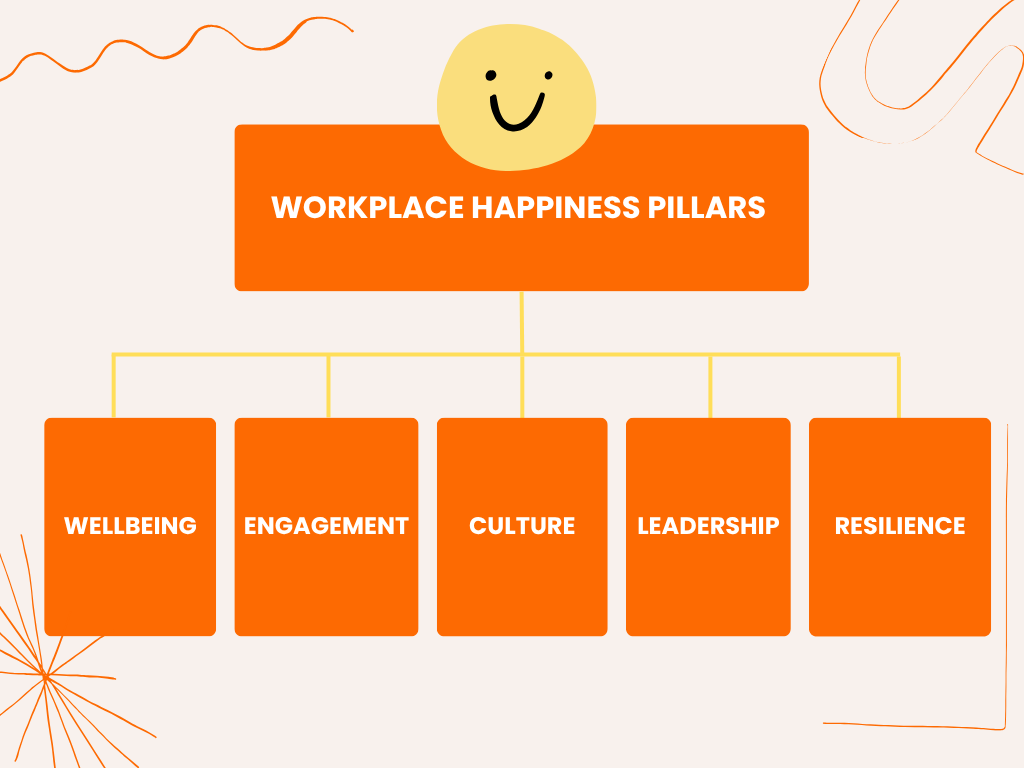
To eliminate guesswork, Edwards’ master’s thesis focused on how well-being is defined and measured within complex, multi-stakeholder corporate structures. His research synthesized an evidence-based framework consisting of five pillars of workplace happiness. He found that when a business strategically funds and measures these five categories, it builds a foundation for long-term growth:
-
Workplace Wellbeing: A multidimensional matrix that accounts for physical, social, and financial wellness.
-
Employee Engagement: Moving past basic compliance into active, purposeful immersion in daily objectives.
-
Business Culture: Cultivating high levels of transparency, structural trust, and explicit psychological alignment.
-
Leadership: Equipping managers with the emotional intelligence required to sustain the preceding pillars.
- Resilience: The team's collective capacity for adaptivity to bounce-back during periods of intense organizational disruption.
The Definition of Resilience:
Edwards challenges the traditional definition of corporate resilience suggesting that "true resilience isn’t a stubborn capacity to absorb stress like a brick wall; it is the flexible ability to adapt your strategy, bring new human skills to the table, and change directions under pressure."
Watch Declan's TEDx: How To Be Happy.
Calculating the ROI of Employee Engagement
For decades, the priority hierarchy of enterprise has placed shareholders at the apex, customers in the middle, and internal teams at the bottom. Edwards’ research suggests this sequence is functionally backwards.
Instead when you elevate internal teams health, your people leave a vastly better footprint on the customer experience, which drastically lowers client churn and drives positive shareholder returns.
This financial transformation can be mapped out using a clear, mathematical formula. Data from a prominent Gallup study shows that allocating roughly 2% of your total payroll into a dedicated employee experience budget has a massive ROI on employee engagement at work.
On average, for every single dollar an organization reinvests into human skill development and psychological support, they reap a return of $2.67. Factors also considered are reduced turnover, fewer psychosocial hazard claims, lower absenteeism, and enhanced staff output.
Budgeting: Designing an Agile Employee Experience
To make this strategy accessible for small and large workforces alike, budget allocations can be categorized across three structural tiers:
-
Casual & Part-Time Personnel: Allocate 1% of their wage baseline toward entry-level team integration and wellness check-ins.
-
Full-Time Personnel: Allocate 2% of their salary metrics specifically toward continuous upskilling, behavioural psychology coaching, and burnout mitigation.
-
Executive Leaders & Key Assets: Allocate 3% of their total compensation toward targeted mental coaching and sustainable resilience development.
WATCH SNIPPET
Elevating Human Skills
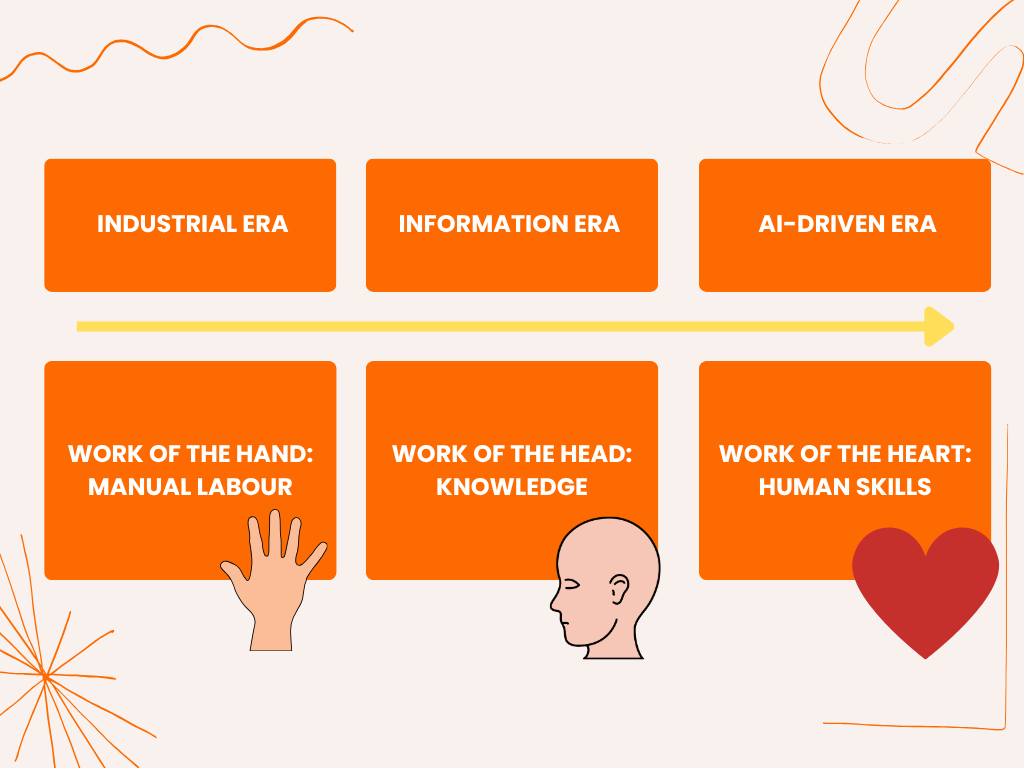
Understanding the science of happiness in the workplace is more critical than ever due to the rapid integration of artificial intelligence. Edwards references a historical precedent: the Industrial Revolution. When machinery automated manual tasks, the workforce shifted from "work of the hand" (labour and agriculture) to "work of the head" (knowledge specialists and technical analysts).
Today, generative AI handles cognitive knowledge tasks with lightening efficiency. Because technology can now process data better than human minds, technical skills alone are no longer a distinct competitive edge.
"We are moving swiftly into an era dominated by work of the heart."
Edwards argues that true optimization requires mastering deep behavioural capabilities:
-
Emotional Intelligence: Proactively reading your own emotional data and navigating team dynamics with precision.
-
Empathy & Active Communication: Forging deep human bonds that technology simply cannot replicate.
-
Habit-Building & Discipline: Intentionally managing your cognitive environment, such as switching off non-essential digital distractions to protect focus.
The Stages of Happiness Skill Development
Transitioning your corporate culture into a human-first workplace requires moving through the four psychological stages of learning:
-
Unconscious Incompetence: The team operates on blind instinct, unaware of their gaps in emotional literacy or structural stress management.
-
Conscious Incompetence: Acknowledging that the team lacks the psychological frameworks needed to comfortably process change.
-
Conscious Competence: The active, deliberate practice of setting boundaries, leveraging empathy, and deploying communication frameworks.
-
Unconscious Competence: Empathy, resilience, and emotional intelligence become second-nature reflexes within the team.
When workplace happiness is backed by strict measurement and clear financial data, business development naturally follows. Happiness skills drive the human connections that fuel sales, retain top talent, and keep companies steady during volatile economic shifts.
🍊 Creative Business is brought to you by Tomorrow
ABOUT US
DIGITAL MARKETING CONSULTANTS
Tomorrow embed inside $1M–$10M professional services to turn complex expertise into high-converting content systems that capture attention and drive growth.