Why Collaboration Wins Deals Over High-Pressure Sales Tactics
Business-to-business commerce has undergone a foundational shift. Buyers no longer need to rely on reps to provide them basic product data; they have the internet for that! But this shift demands a transition in selling behaviour, from legacy transaction-focused models to modern sales techniques rooted in ethical selling practices.
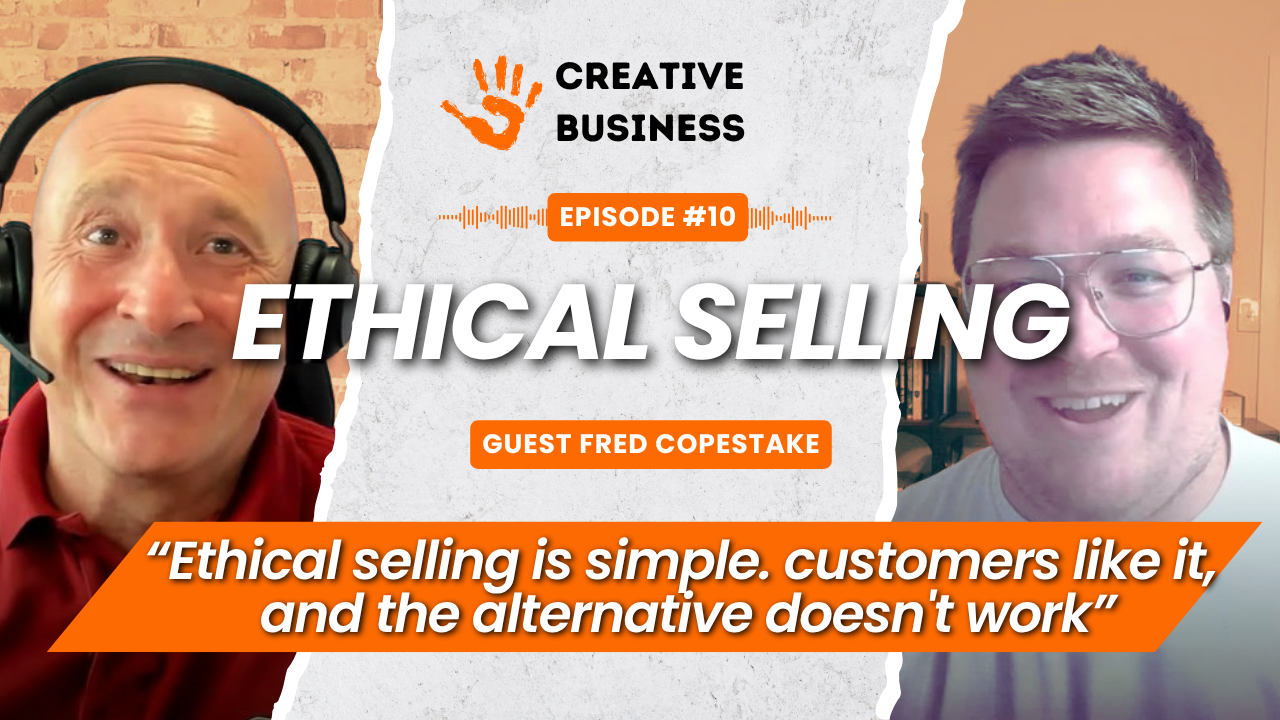
In this episode of the Creative Business Podcast, Brad Eather and author of Ethical Selling, Fred Copestake sit down to unpack how the sales profession is evolving.
Redefining the Salesperson Role
A truth of modern business is that buyers are incredibly self-sufficient. By the time a prospect engages with a seller, they have likely researched competitors, reviewed features, and parsed data sheets.
As Copestake observes, "Don't be a bloody website because websites are better at being websites."
When a sales professional simply recites product specs, features, and benefits, they fail to add value. Instead, the modern commercial practitioner must step into the role of a sense-maker. The sense-makers job is to bring their unique perspective, interpret the sea of marketplace information, and help the client gain contextual clarity around their specific problems.
LISTEN NOW
Early-Stage Customer Journey
To effectively add value, professionals must engage buyers long before a formal request for proposal (RFP). Waiting for a prospect to reach out with a pre-determined specification sheet usually means entering the cycle too late. By that point, the buyer has already framed their own solution to their problem (or a competitor has guided their thinking).
True B2B journey mapping focuses on identifying external macroeconomic drivers affecting the client's industry.
Sellers must ask:
-
What regulatory, political, social, or technological shifts are impacting their business?
-
What challenges are these shifts introducing to their long-term objectives?
-
How will they measure success?
By building an early-stage map around these questions, a rep can initiate diagnostic conversations before the buyer has started to lock in a budget.
Overcoming the Pressure of Sales Targets
One of the steepest hurdles to maintaining a customer-first mindset is the structural anxiety embedded within corporate environments. Many sales organizations are shackled to short-term, month-to-month, or quarter-to-quarter metrics. This focus can force reps into a defensive posture leaving them displaying behaviours akin to a "rat in a cage".
When forced to prioritize immediate quotas over the client’s timeline, reps often resort to high-pressure closing tactics. This behaviour exposes a flaw in the trust equation in business. Trust is heavily dictated by self-orientation. If a buyer senses that a seller's primary motivation is hitting a monthly quota rather than solving an actual operational issue, self-orientation spikes, and trust collapses.
Overcoming sales target pressure requires internal accountability and a commitment to strategic alignment. Drawing an analogy from sports, Copestake compares a short-sighted corporate target to a coach demanding an illegal game plan. If a player executes a flawed, penalty-heavy strategy, the team loses, and the player’s career value declines. Sales professionals must protect their long-term professional capital by advocating internally for realistic timelines and standing their ground when any part of the process threatens to ruin a key client relationship.
Creating Value through Customer Collaboration
Ethical selling does not mean being passive, transparent to a fault, or giving away profits. Rather, it aligns with a structured, collaborative framework. The ultimate goal is to move past transactional models and co-create outcomes with the buyer.
The Value Equation: "Value is a Mystery"
Value is not inherent to a product or service; it is entirely situational. Copestake references a concept taught by value expert Mike Wilkinson: value is a mystery. Because value is defined by the customer’s context, it remains an unknown equation until both parties have actively dug into the problem together.
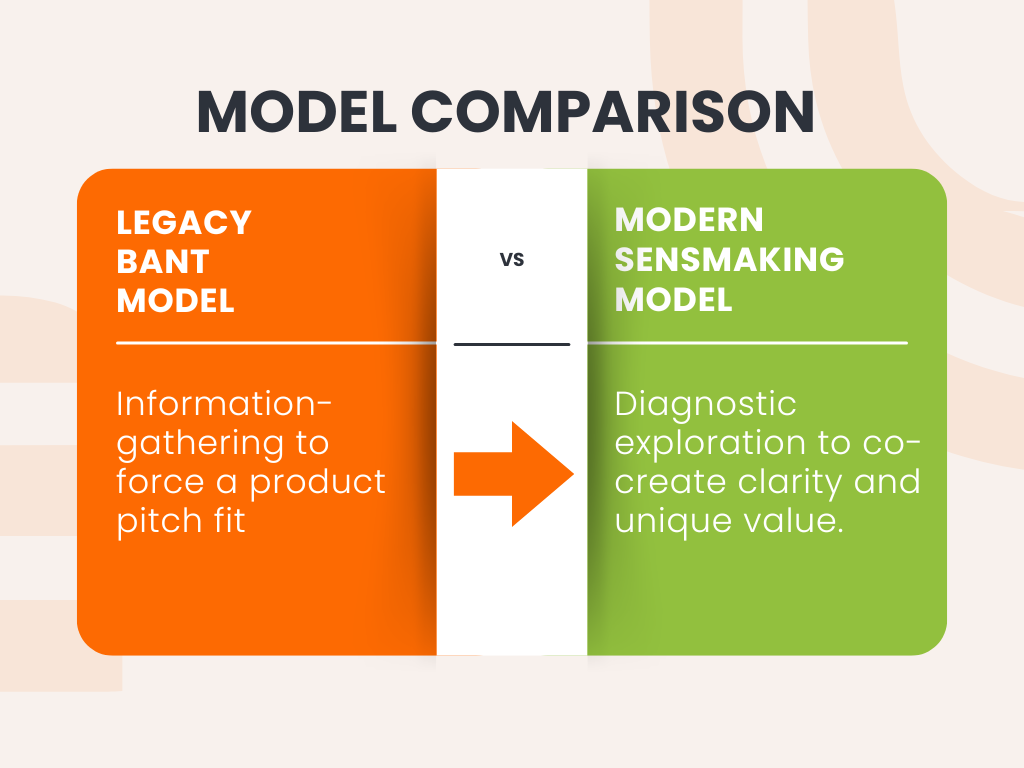
Legacy frameworks relied heavily on rigid qualification models like BANT (Budget, Authority, Need, Timeline) to extract information and execute a pitch. Modern consultative is more nuanced. Discovery questions should not be self-centered; they should challenge the client’s assumptions, encourage a growth mindset, and deliver cognitive clarity before a solution is introduced .
Complex Sales vs. Transactional SaaS
It is critical to distinguish between business environments. Much of the popular noise on platforms like LinkedIn is driven by high-volume SaaS sales models. These frameworks are often highly transactional, leaning heavily on automated outreach, permission-based openers, and structured SDR (Sales Development Representative) assemblies.
While assembly-line efficiency may well work for that cloud software market, it falls apart in complex engineering sales and customized enterprise solutions. Complex deals require cross-functional harmony. Reps must orchestrate conversations involving technical specialists, financial stakeholders, and multiple internal operations leaders. In these environments, buyers dislike being tossed like a hot potato across internal departments. They prefer a single dedicated partner who maintains accountability from end-to-end; discovery through to implementation.
WATCH CLIP
The Importance of Professional Development in B2B Sales
Because modern enterprise selling requires advanced human-to-human skills, successful organizations are the ones who invest in ongoing professional development for B2B sales teams. Relying solely on manufacturer product training teaches teams to look inward rather than outward.
True professional development centres on refining a rep's communication skills.
Teams should focus on three layers:
-
Empathetic Communication Techniques: Moving beyond generic pitch scripts to master active listening, reading subtle human dynamics, and understanding buying psychology.
-
The Power of "Qualifying Out": Cultivating the discipline to gracefully walk away from misaligned opportunities. Accepting that a prospect is not a fit saves corporate resources and preserves market integrity.
-
Authentic Digital Business Development: Utilizing social platforms like LinkedIn to scale individual authority. Sharing personal insights, recording raw video commentary, and speaking directly to customer realities builds a credible digital footprint that naturally eases early outreach.
Ultimately, high-performing sales organizations realize that sustainable growth stems from a culture of continuous learning. By replacing transactional pressure with creative, ethical problem-solving, sales professionals can transform themselves from basic vendors into irreplaceable strategic assets.
🍊 Creative Business is brought to you by Tomorrow
ABOUT US
DIGITAL MARKETING CONSULTANTS
Tomorrow embed inside $1M–$10M professional services to turn complex expertise into high-converting content systems that capture attention and drive growth.